RGGI “Tipping Points”
Time for Reliable Renewables

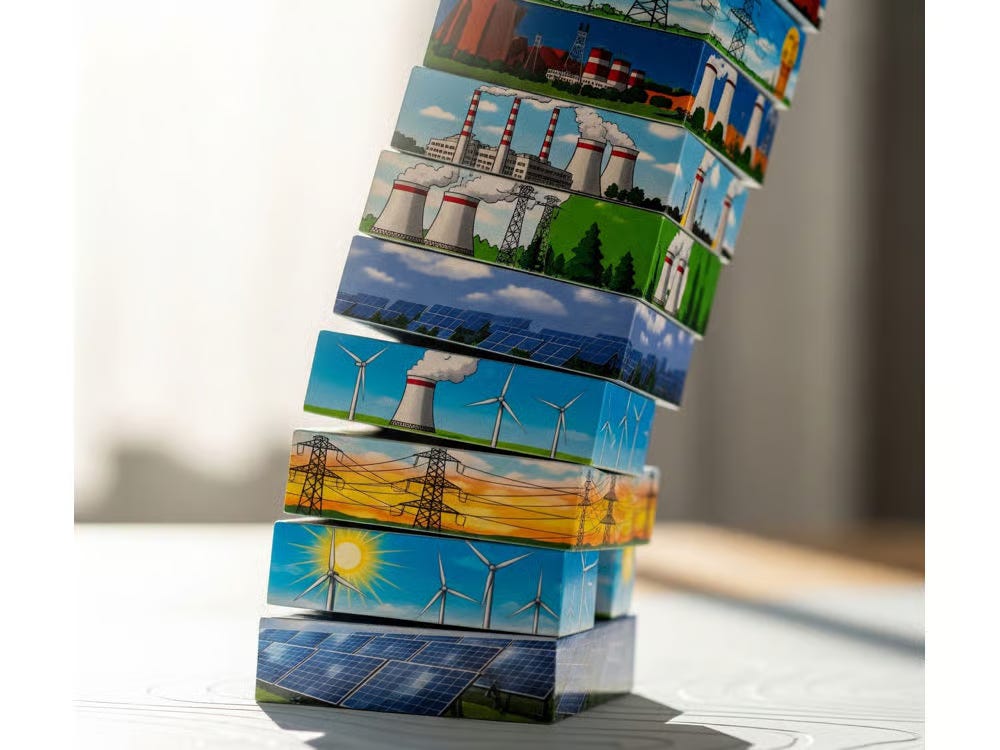
The Regional Greenhouse Gas Initiative (RGGI) states (Connecticut, Delaware, Maine, Maryland, Massachusetts, New Hampshire, New Jersey, New York, Rhode Island, and Vermont) remain committed to reducing CO2 emissions from their electric generation infrastructure. Virginia was an RGGI state until 2023 and legislation currently requires the state rejoin RGGI in 2026.
The RGGI states operate a “cap and invest” program which imposes emissions-based fees on fossil fueled electric generators while actively encouraging expansion of renewable generation. Electric demand growth has largely been served by renewable generation, which has also required significant transmission infrastructure expansion. However, the demand growth in combination with fossil generation plant shutdowns has reduced the dispatchable generation fleet capacity and the system capacity reserve margins on peak.
The RGGI states are thus approaching “tipping points” which would require additional dispatchable generation capacity to restore and preserve capacity reserve margins. However, RGGI policies would require this dispatchable capacity to be achieved with renewable generation, which would require the additional renewable generation capacity to be accompanied by electricity storage capacity sufficient to render the otherwise intermittent generation dispatchable.
Virginia, once it re-enters RGGI, would likely be the first of the states to require the addition of dispatchable renewable generation systems. Virginia has a list of data centers waiting for the availability of additional generating capacity. Dominion Energy had proposed the addition of several natural gas combined cycle generators during the period Virginia was not a member of RGGI. However, it is unlikely that these plants would be approved and constructed after Virginia rejoins RGGI.
Dominion Energy is currently constructing the Coastal Virginia Offshore Wind (CVOW) facility, which is expected to begin operation in 2026 and reach full capacity in early 2027. However, this 2.6 GW wind facility does not incorporate electricity storage capacity. It is expected to have a capacity factor of 40 – 50%, which means that it would generate 9 – 11 TWh annually. Rendering this offshore wind facility dispatchable would require installation of storage capacity of approximately 2.5 TWH, which would increase project cost from approximately $11.5 billion to approximately $1.3 trillion based on current grid scale battery storage systems.
Dominion Energy is the majority owner of the Bath County pumped hydro storage system, which is the largest pumped hydro storage system in the US. Bath County’s 3 GW generating capacity could replace the output of CVOW, but only for approximately 8 hours. However, recharging the storage facility would require the full capacity of CVOW for another 8 hours. Reproducing the capacity of the Bath County facility would cost approximately $5 billion, assuming a suitable site could be found and approved. Rendering CVOW dispatchable would require the equivalent of approximately 120 Bath County facilities
The RGGI states have expanded renewable generation capacity but have largely avoided adding the electricity storage capacity necessary to make the renewable capacity dispatchable because of the extremely high cost of the required storage. However, with the projected increase in electric demand in the RGGI states, that investment becomes inevitable. However, it certainly would not result in reduced electricity rates.
Originally published here.
"The RGGI states operate a “cap and invest” program which imposes emissions-based fees on fossil fueled electric generators…Electric demand growth has largely been served by renewable generation, which has also required significant transmission infrastructure expansion. However, the demand growth in combination with fossil generation plant shutdowns has reduced the dispatchable generation fleet capacity and the system capacity reserve margins on peak.
The RGGI states are thus approaching “tipping points” which would require additional dispatchable generation capacity to restore and preserve capacity reserve margins."
The tipping point occurs after the “wind drought trap” has been set when coal stations close one by one, arousing no concern, like the frog in the saucepan, until the point is reached when there is not enough dispatchable power on a windless night in extreme weather conditions.
Demand growth is NOT served by increasing the capacity of wind and solar.
Build as much wind and solar capacity as you like, but there is nothing there when the sun and wind are off duty.
A chain is only as strong as its weakest link, like the lowest point of a fence, a dam or a flood levee.
The sustainability of a grid loaded with wind and solar is limited by the lowest level of delivery, but the enthusiasts are captivated by the ever-increasing high points as more facilities are installed.
Sadly, the high numbers don’t count during a nocturnal wind drought, as we saw in Texas during the week 19-26 January 2026.
https://rafechampion.substack.com/p/wind-and-solar-aint-capacity
Lessons from the storms in Texas. In January this year, severe storms provided a natural experiment to test whether wind and solar are fit for purpose to supply power to the grid. In Texas, during the week of January 19-26, wind, solar, and batteries failed, while conventional power kept the lights on.
https://rafechampion.substack.com/p/two-lessons-from-texas
Does anyone give a flip about reality anymore. Absolutely zero fiscal responsibility and renewable insanity.